

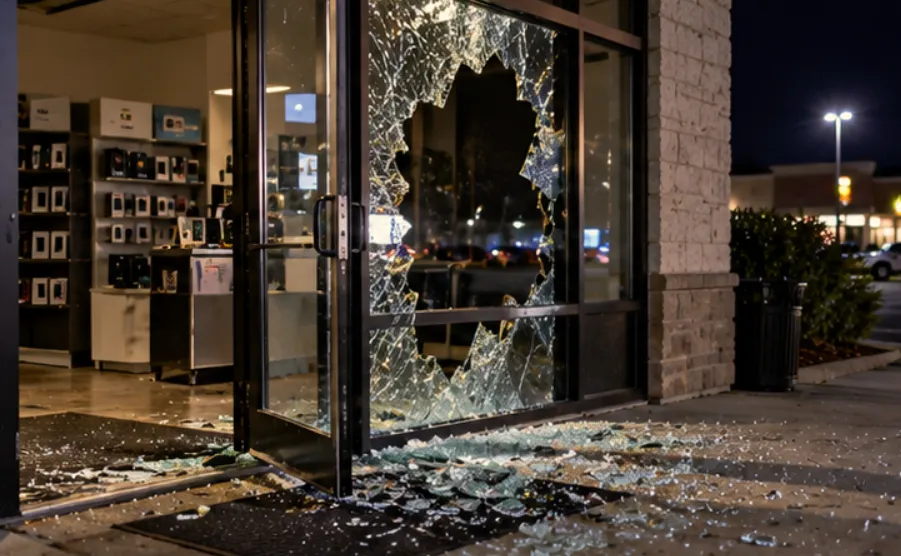

The alarm company calls at 2 a.m. Or a neighbor texts before sunrise. You get to your Washington DC storefront and find shattered glass across the entrance and a window wide open to the street. Now you need to secure the property, document the damage and work out how soon you can reopen.
Here’s the short answer. Stay out until police clear the scene, photograph everything, get the opening boarded up the same night, then call your insurer and landlord in the morning. That order protects your people, your evidence and your claim. Everything else, from the permanent glass to reopening, follows from it.
Below is the full timeline, hour by hour, for business owners and property managers across Washington DC, Maryland and Virginia.
Hour 1: Is It Safe to Go Inside?
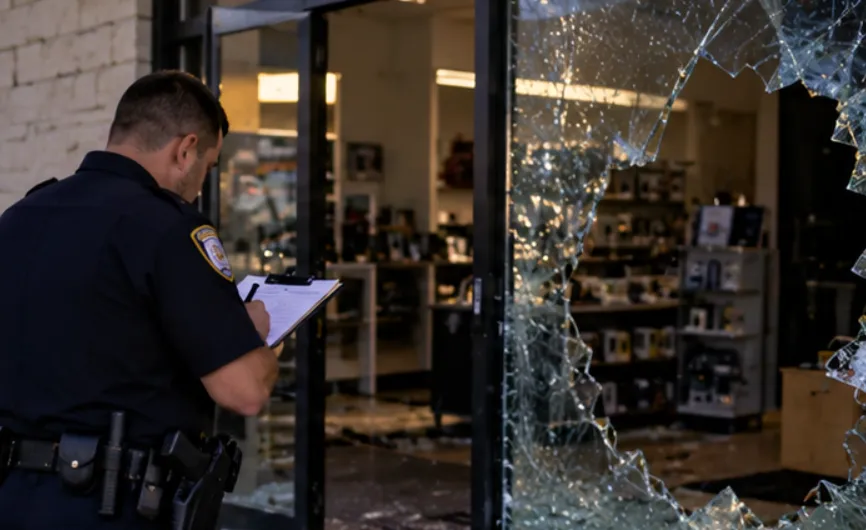
Not yet. Your first instinct is to rush in and check what’s missing. Don’t. The intruder could still be inside or nearby. Broken glass hides under debris. A damaged door or frame can give way.
Prioritize these steps:
- Call 911 if anyone might still be inside: If you’re not sure, treat it as in progress. Never confront an intruder.
- Call the police non-emergency line if the scene is clearly empty: Ask for an officer to respond and for a report number.
- Call your alarm company: Ask what time the alarm tripped and which sensors went off.
- Keep people away: Prevent employees, customers, and passersby from entering the damaged area.
- Wait for police clearance: Follow officers’ instructions before entering or moving anything.
Don’t touch broken glass, damaged locks or anything the intruder may have handled. Once police say it’s safe, start documenting and get the board-up on the way.
Hours 1 to 2: What Should You Photograph Before Anything Is Moved?
Everything, before cleanup starts. Get the report number from the responding officer first. Your insurer will ask for it.
Then photograph the scene from the sidewalk in, wide shots first, then close-ups. Get the broken glass, the frame, the entry point, the interior and any damaged stock.
Use this list so nothing gets missed:
- Exterior damage: Photograph broken windows, doors, locks, and entry points.
- Interior damage: Document damaged displays, fixtures, merchandise, and equipment.
- Security equipment: Record visible damage to cameras, alarms, or access-control systems.
- Surrounding areas: Capture relevant damage near the entrance, provided it is safe.
- Temporary repairs: Photograph the secured opening after the board-up is completed.
Keep the original files so the timestamps survive. Save your security footage from before and after the break-in. Ask the businesses next door to save theirs too, since many systems record over old footage within days.
Hours 2 to 4: How Do You Get the Storefront Secured Tonight?
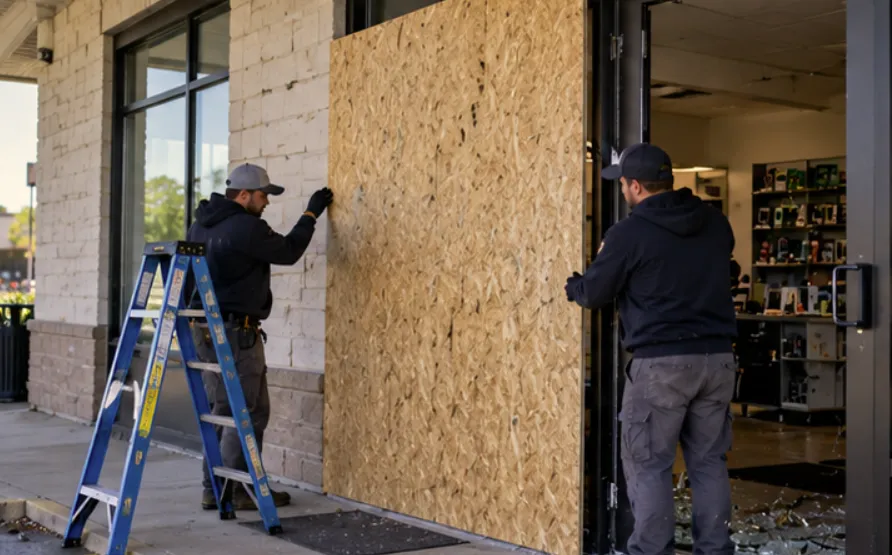
Call for an emergency board-up as soon as police clear the scene. An open storefront invites a second break-in. It lets in rain and cold. And most commercial property policies expect you to take reasonable steps to stop further damage, so waiting until morning can complicate your claim.
A board-up closes the opening with plywood fastened securely over or into the frame. It’s temporary, but it locks the building down until the permanent glass is in.
Have these details ready when you call:
- The business address and type of property.
- The location and approximate size of each damaged opening.
- Whether the entrance door, window, or frame is affected.
- Whether police have cleared the scene for repair work.
- Any access restrictions or immediate security concerns.
Ask the board-up team to check every opening, not just the obvious one. Pry marks on a second door or window are easy to miss in the dark.
Not every glass company answers at 2 a.m. We do. Our emergency board-up service runs 24/7 across Washington DC, Maryland and Virginia. Call (571) 583-8882.
What Happens After the Board-Up Goes On?
Once the opening is secure, walk the building with the board-up team. Check the locks, the alarm panel, the cameras and any access-control readers. Break-ins often damage these, and a door that won’t lock is as big a risk as missing glass.
If keys were taken or the entrance was forced, get the locks re-keyed or the hardware replaced before you leave. Our commercial door repair work covers locks, closers and frames.
We also paint every board-up to match your storefront. A painted board-up looks cared for, not abandoned, which matters on a street full of foot traffic while you wait on the glass.
Keep the damaged area closed off until the broken glass and exposed hardware are cleaned up, and only start the cleanup once your photos are done.
First Thing in the Morning: Who Do You Call Next?
Your insurer, then your landlord or property manager. Most commercial policies set deadlines for reporting theft and vandalism, so call your agent or insurer as soon as their office opens.
Give them the police report number and ask three questions. Does an adjuster need to see the damage before the permanent repair? Do they need more than one estimate? What do they need to see on the board-up invoice?
Why Call the Landlord the Same Morning?
If you lease the space, check your lease before you approve the permanent repair. Many commercial leases spell out whether storefront glass is the landlord’s or the tenant’s responsibility, and the landlord’s insurance may be the one that pays. Your property manager may also have a glass vendor and an approval process already in place. One call now avoids two invoices and a dispute later.
Log every call: the date, who you spoke to and what they told you.
Coverage depends on your policy, deductible and exclusions, so don’t assume every cost is covered. Get approval before nonurgent work starts.
Late Morning: What Does the Permanent Glass Repair Involve?
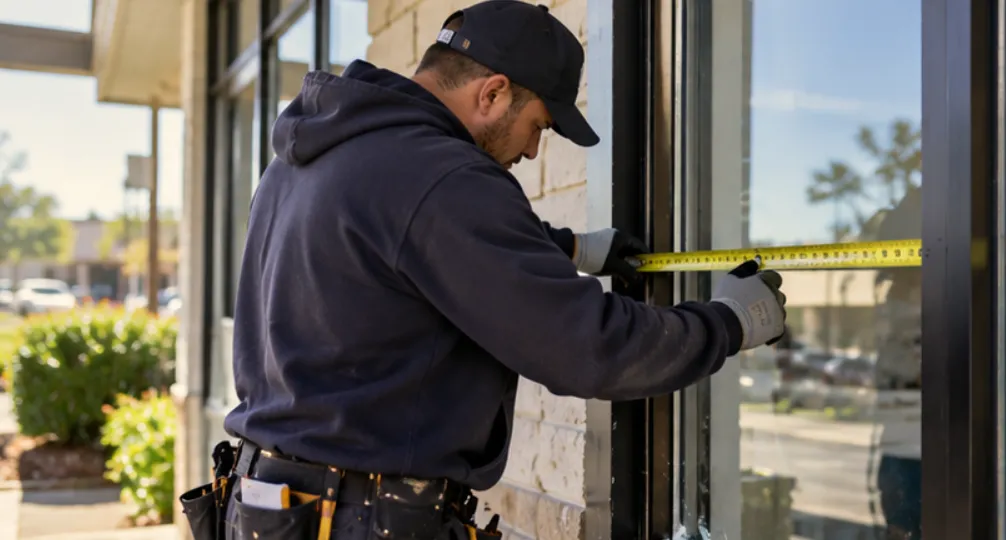
A measure, an order and an install. The glass is measured, ordered to size and installed once it arrives. The exact scope depends on the glass type, the panel size, the frame and whether the door or hardware took damage too.
Often the frame can stay and only the glass changes. A bent or pried frame needs repair first, or the new glass won’t seal or sit right. Glass in and near doors has to be safety glass under building code, so the replacement has to suit the opening, not just match the size.
When discussing the repair, ask the contractor to explain:
- Whether the existing frame is damaged.
- What type of replacement glass is appropriate.
- Whether additional hardware or door repairs are necessary.
- Whether the glass must be specially ordered.
- What factors may affect installation timing.
Large or custom panes usually have to be ordered, so the permanent fix rarely happens the same day. That’s what the board-up is for. Still weighing repair against full replacement? Our guide on whether to repair, replace or board up storefront glass walks through each option, and our storefront glass repair team handles the install.
Midday: Is Your Paperwork Ready for the Claim?
By midday you’ll have a pile of records: the police report, photos, footage, a board-up invoice, a glass estimate and notes from the insurer. Put them in one folder now. Missing paperwork is a common reason claims stall.
Ask for itemized invoices. An itemized invoice lists labor, materials and disposal line by line instead of one lump total, so the adjuster can see exactly what was done. Every board-up and repair invoice we send is built this way.
Check the folder against this list:
| Document | What to check |
|---|---|
| Police report information | Incident number and reporting details |
| Photos and footage | Original damage plus saved security footage |
| Board-up invoice | Description of temporary work and charges |
| Glass repair estimate | Proposed permanent repairs and costs |
| Lease and landlord notes | Who is responsible for the glass and who approved the repair |
| Insurer communications | Claim number and requested documents |
Keep copies of everything and submit them the way your insurer prefers. Clean paperwork speeds up the review. The insurer still decides what’s covered.
Afternoon: Can You Reopen With a Boarded-Up Window?
Often, yes. A board-up secures the opening, but it doesn’t make the space safe on its own. What decides it is whether your entrance works, the glass is cleaned up and your locks and alarm are back online.
Check these before you unlock the door for customers:
- Safe access: Confirm that required entrances and exit routes are usable.
- Glass and debris: Keep people away from damaged areas until hazards are addressed.
- Security systems: Check locks, alarms, cameras, and access-control equipment.
- Merchandise records: Document losses before discarding damaged items, following insurer instructions.
- Customer communication: Update business hours or access information if operations are affected.
Many businesses reopen with a painted board-up still on one window. If the entrance itself is boarded, you’ll need another safe, code-compliant way in and out before you open.
Evening: What Should Be Settled Before You Lock Up?
Three things: the building is secure, the damage is documented and every next step has a name and a date on it. The permanent glass may still be days away, and that’s normal.
Confirm who owns each open task: you, the landlord, the insurer or the glass company.
Get an install date from your glass contractor, even a tentative one. And save the number to call if someone tampers with the board-up overnight.
A board-up buys you time. A plan turns that time into a finished repair.
Why Choose American Glass and Doors After a Storefront Break-In?
After a break-in, you want one call that covers the night and the fix. American Glass and Doors answers 24/7 for emergency board-up across Washington DC, Maryland and Virginia. We secure the opening the same night, paint the board-up to match your storefront and hand you an itemized invoice your insurer can work with.
Then the same team measures, orders and installs the permanent glass, and repairs the door or locks if they took a hit. No second contractor and no handoff, because board-up, glass and doors all sit within our commercial glass and door services.
Storefront broken into? Call (571) 583-8882, day or night, and we’ll get your property secured tonight. For repairs that can wait until business hours, you can also send us the details online.
Frequently Asked Questions
Should I Clean Up Broken Glass Before the Police Arrive?
No. Leave the scene as it is until police release it, because the glass and debris can be evidence. Once they do, photograph everything before you sweep up or throw anything away. Your insurer will want to see the damage as it was, not after cleanup.
Can a Storefront Be Boarded Up in the Middle of the Night?
Yes. Emergency board-up is built for exactly that. American Glass and Doors answers board-up calls 24/7 across Washington DC, Maryland and Virginia. How long the job takes depends on where you are, how big the opening is and how many openings need covering, so describe the damage clearly when you call.
Does Insurance Cover Emergency Board-Up After a Break-In?
Often, yes, but it depends on your policy. Most commercial property policies expect you to protect the property from further damage after a loss, and a board-up is the standard way to do that. Report the break-in promptly, keep the police report number and photos, and save the itemized board-up invoice for your claim.
Who Pays for Broken Storefront Glass, the Landlord or the Tenant?
It depends on your lease. Many commercial leases make storefront glass the tenant’s responsibility, while others leave it with the landlord or the building’s insurance. Check the repair and insurance sections of your lease, and call your landlord or property manager before approving permanent work so the right policy is billed.
Should You Change the Locks After a Break-In?
Yes, if keys were taken, the door was forced or the lock was damaged. A forced lock may still turn but no longer hold, and missing keys mean anyone could walk back in. Re-keying is quick when the hardware is sound. A damaged cylinder, latch or strike should be replaced. Get it done the same day as the board-up.