




A broken storefront panel puts three decisions in front of you at once, usually while customers are still standing on the sidewalk. You need the opening secured, the glass dealt with, and your doors open again without losing more days than the damage has already cost you.
The right answer is not the same for every business in Washington DC. Whether you need commercial glass repair, full storefront glass replacement, or an emergency board-up first depends on the type of glass, the condition of the frame, and how quickly a replacement panel can be sourced. Knowing how those factors interact can help you make the call with confidence.
What Should You Do First After Storefront Glass Damage?
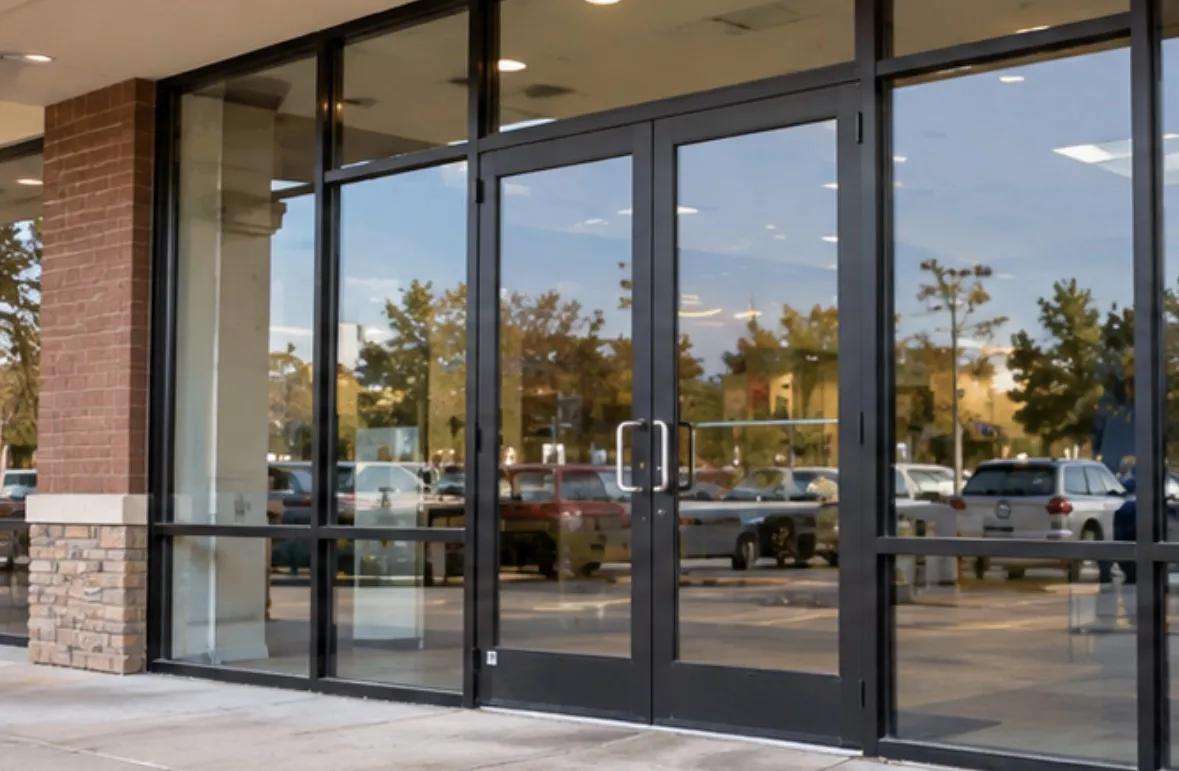
Your first priority is keeping people away from the opening. Broken storefront glass can continue to fall for hours after the initial break, especially when the panel is still partly held in its frame. Clear the area, keep customers and staff back, and avoid pulling loose pieces free yourself.
Once the area is safe, document what you are looking at. Photograph the damage from several angles, including the frame and any hardware, before anything is moved or swept up. Most insurers will ask for this, and it is far easier to capture now than to reconstruct later.
Then call a commercial glass contractor rather than a general handyman. Storefront systems use specific glass types and framing, and the assessment of what can be saved needs to happen before the cleanup starts.
Which Storefront Glass Situations Call for Which Response?
The response depends less on how dramatic the damage looks and more on what actually failed. A shattered panel and a cracked one can require very different work, and the condition of the frame often matters more than the glass itself.
The table below outlines the situations commercial glass contractors see most often across Washington DC and the surrounding area. An on-site assessment is still what settles it, but this can help you anticipate the likely path before anyone arrives.
| What Happened | Likely Response |
|---|---|
| Tempered panel shattered completely | Full panel replacement, with a board-up first if the glass is not in stock. |
| Laminated panel cracked but still holding | Replacement can often be scheduled rather than treated as an overnight emergency. |
| Surface scratch or chip in a sound panel | Light scratches can sometimes be polished out. A chip in laminated glass may be monitored, but a chip in tempered glass, especially near the edge, usually means replacement. |
| Glass intact, frame bent or pulled loose | Frame and glazing work, sometimes with no new glass at all. |
| Loose glazing gasket or failed glazing seal | Re-glazing the existing panel is frequently enough. |
| Fogging between the panes of an insulated unit | The sealed glass unit is replaced, but the frame usually stays. |
| Vehicle or break-in damage to glass and frame | Emergency board-up first, then glass and frame addressed together. |
The distinction that surprises most business owners is that tempered storefront glass cannot be repaired once it breaks. It is engineered to shatter into small, dull pieces for safety, so any crack or impact means that panel is replaced rather than patched.
Older storefronts and transoms can still have annealed, non-safety glass, which breaks into large, sharp shards. It cannot be repaired either, and where it sits in or next to a door or low to the floor, the building code calls for it to be replaced with safety glass.
When Is Storefront Glass Repair Enough?
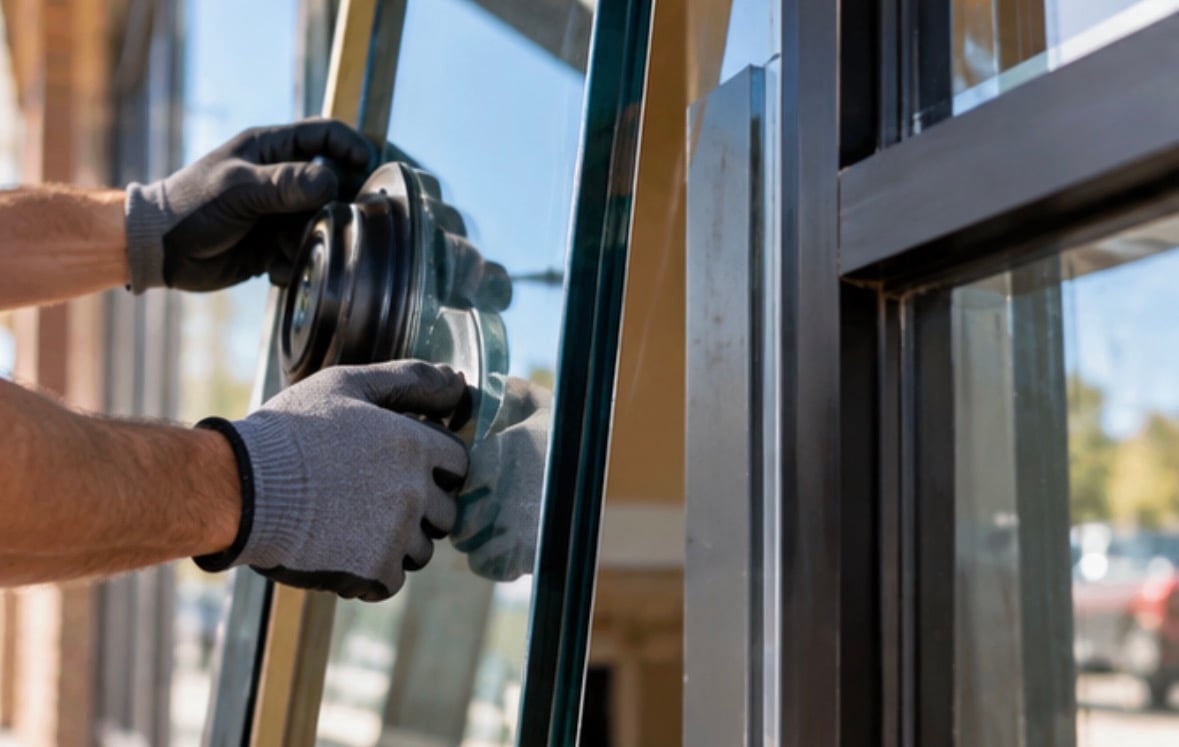
Repair is a realistic option more often than business owners expect, though not always in the way they expect. In storefront systems, what gets repaired is frequently the frame, the glazing, or the hardware rather than the glass panel itself.
Damage Is Limited to the Frame or Glazing
When the glass is sound but the gasket, glazing compound, or a frame section has failed, the existing panel can often stay exactly where it is. Re-glazing and frame work can restore a weathertight seal without the cost or lead time of a new panel.
The Panel Has Surface Damage Rather Than Structural Damage
Light scratching does not automatically compromise a panel, and some scratches can be polished out. Chips are different: a chip in laminated glass may be monitored, but a chip in tempered glass, especially near the edge, can cause the panel to shatter later. A contractor should confirm the panel still meets safety glazing requirements.
Only One Section of a Multi-Panel System Is Affected
Storefront systems are usually built from several panels sharing one frame. When damage is contained to a single section, that section can often be addressed on its own rather than rebuilding the full run.
If you are unsure which category your damage falls into, an on-site assessment can settle it quickly. A contractor who inspects the glass, frame, and hardware together is better positioned to tell you when a repair will genuinely hold and when it will only delay the replacement you are going to need anyway.
When Does Full Storefront Glass Replacement Make More Sense?
Replacement becomes the better decision when a repair would leave you with a panel that is weaker, non-compliant, or likely to fail again. For storefront glass, that threshold tends to be reached faster than it is for most other parts of a building.
Cost is rarely the only factor. Code requirements, the age of the surrounding system, and how the panel performs for security and energy use all affect whether storefront glass replacement is the more practical investment over the next several years.
| Factor | Why It Points Toward Replacement |
|---|---|
| Glass type | Tempered panels cannot be repaired once broken and have to be replaced. |
| Code compliance | Glass in and next to doors, and large panels near the floor, must meet safety glazing requirements a patched panel may not. |
| Frame condition | A bent or corroded frame can stress a new panel and cause repeat failures. |
| System age | Older framing may no longer accept current glass sizes or gaskets without modification. |
| Security needs | Repeat incidents may justify upgrading the glass rather than restoring what was there. |
| Energy performance | Failed or single-pane units raise heating and cooling costs every month they stay in. |
Replacement also resets the clock on the surrounding components. Because the frame, gaskets, and hardware are handled at the same time, a full panel replacement often resolves problems that a glass-only repair would leave quietly in place.
When Does Your Storefront Need an Emergency Board-Up First?
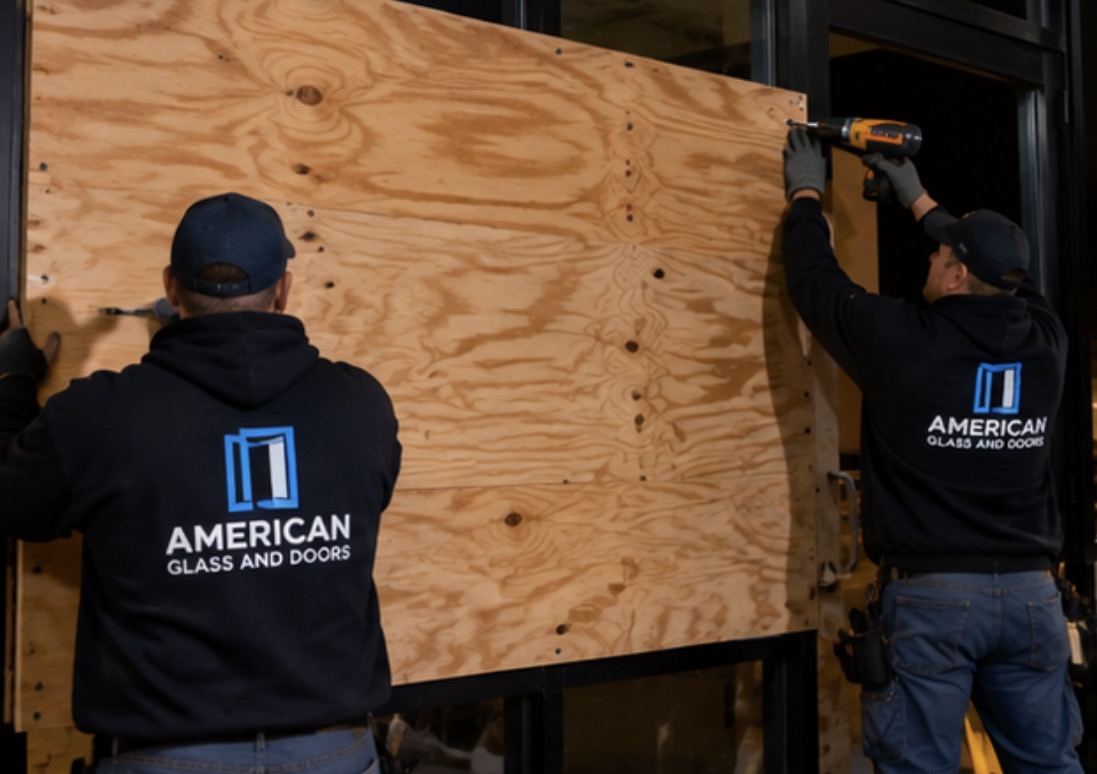
A board-up is not a substitute for the repair. It is the step that buys you time between the damage and the permanent fix, and in several common situations it is the only responsible first move. The goal is to secure the opening, protect the interior, and stop the loss from growing overnight.
The Opening Cannot Be Left Unsecured Overnight
An open storefront exposes inventory, equipment, and the building itself to weather and theft, and breaks rarely happen at a convenient time. A contractor with live overnight dispatch can board the opening the same night, which keeps a straightforward glass claim from turning into a far larger loss claim by morning. That matters most for ground-floor retail and restaurants on busy streets.
The Replacement Glass Is Not Yet On-Site
Commercial glass is cut to the exact specification of the opening, so it is rarely a stock item. When a panel has to be fabricated, an emergency board-up keeps the business secure and often keeps it trading while the glass is made.
The Frame Was Damaged Along With the Glass
When framing is bent or torn loose, there is nothing sound left to hold a new panel. Securing the opening first allows the frame to be measured, repaired, or replaced properly rather than rushed into service.
How Does Storefront Glass Damage Affect Your Insurance Claim?
Most commercial property policies cover glass damage from break-ins, vandalism, storms, and vehicle impact, though deductibles and exclusions vary considerably. What tends to slow a claim is not coverage itself but the quality of the documentation supporting it.
Insurers generally want to see the damage before it was cleared, the work done to secure the property, and a clear breakdown of what was charged. Photographs taken at each stage and an itemized invoice that separates labor, materials, and disposal usually move a claim faster than a single lump-sum figure.
It is also worth checking whether your policy treats the board-up and the permanent repair as one claim or two. Asking that question before the work starts can prevent an unwelcome surprise when the second invoice arrives.
How Long Will Your Storefront Be Out of Service?
Downtime depends mostly on whether the glass has to be ordered. Once a replacement panel is on-site, many storefront glass replacements are completed within one to two days, and single-panel work is often finished in a single visit.
The variables that stretch a timeline are frame damage, oversized or specialty panels, and safety or bullet-resistant glass, all of which take longer to fabricate. A contractor should be able to give you a realistic window once the opening has been measured.
In the meantime, a properly fitted board-up with a paint-matched finish can keep the space presentable and usable. Many businesses across Maryland and Northern Virginia stay open through the repair rather than closing, which limits the revenue lost to the damage itself.
FAQs
Can Cracked Storefront Glass Be Repaired Instead of Replaced?
It depends on the glass type. Tempered panels cannot be repaired once they crack and have to be replaced. Laminated glass that is cracked but still holding together can often stay in place safely until a scheduled replacement. Older annealed glass cannot be repaired either, and in or near a door it should be replaced with safety glass.
Should You Board Up a Broken Storefront or Wait for the New Glass?
Board up if the opening cannot be locked, glass is falling or missing, or the replacement panel will not arrive the same day. Commercial glass is usually cut to order, so waiting can leave the space exposed overnight. A board-up secures the opening and protects inventory while the permanent glass is measured and fabricated.
Are the Board-Up and the Glass Replacement One Insurance Claim or Two?
It depends on your policy. Some carriers treat an emergency board-up as part of the same glass claim, while others handle it as a separate expense with its own terms. Ask your carrier before work starts, and keep photos of the damage and itemized invoices for both stages. Only your insurer can confirm what is covered.
Should You Upgrade to Safety Glass After a Break-In?
If your location has been targeted more than once, upgrading during the replacement is worth considering. Laminated glass holds together when struck, which slows forced entry, and bullet-resistant glass suits banks, pharmacies, and other higher-risk sites. It costs more upfront, but it is easiest to fit while the opening is already being reglazed.
Is It Safe to Leave Cracked Storefront Glass in Place?
Only for a short time, and only if the glass is laminated and still firmly held in its frame. A cracked tempered panel can let go all at once, and cracked annealed glass can drop large, sharp pieces. Keep people away from the panel, avoid pressing on it, and have it assessed as soon as possible.
Why Choose American Glass and Doors for Commercial Glass Repair in Washington DC?
Storefront glass, framing, and hardware work together as one system, so we inspect them together before recommending the next step. At American Glass and Doors, we assess the condition of the glass, frame, and surrounding components to determine whether a repair, replacement, or emergency board-up makes the most sense.
Serving Washington DC, Maryland, and Northern Virginia since 2018, our licensed, bonded, and insured team has a live dispatcher available 24/7 for commercial glass emergencies.
Whether you need emergency glass repair tonight or simply want an honest assessment before replacing a damaged storefront panel, we are ready to help. We focus on fixing what actually needs to be fixed rather than recommending unnecessary work. Call (571) 583-8882 to reach our live dispatcher and get your storefront secured.