




Commercial sliding doors handle constant traffic, so when they begin sticking, dragging, or making noise, it usually gets noticed quickly. The encouraging part is that most of these problems develop gradually and are preventable. A few routine habits keep your entrance operating smoothly and help you avoid unplanned repairs and downtime.
Whether you manage a storefront, a medical office, or a busy lobby, the same maintenance steps apply. This guide walks through five practical ways to keep commercial sliding doors moving well, along with the signs that it is time to schedule commercial door repair.
Why Do Commercial Sliding Doors Develop Problems Over Time?
Commercial sliding doors may cycle hundreds or even thousands of times per day depending on the business. In retail stores, healthcare facilities, office buildings, and restaurants, that constant movement gradually wears rollers, tracks, sensors, and automatic operators. Most major failures begin as small maintenance issues that go unnoticed during daily operations.
During service calls, technicians commonly find dirt-packed tracks, worn rollers, loose guide assemblies, and doors operating slightly out of alignment. These issues rarely shut a door down immediately. Instead, they create extra resistance that forces the operator to work harder every day until performance, safety, and reliability begin to suffer.
Common Signs Your Sliding Door Needs Attention
- Employees Start Holding the Door Open: Staff notice the door hesitates or closes more slowly than it used to, causing them to manually assist customers entering the building.
- Customers Hesitate at the Entrance: The door opens inconsistently or takes longer to respond to motion sensors, creating awkward pauses and traffic bottlenecks during busy periods.
- New Noises During Peak Hours: Grinding, clicking, or scraping sounds become more noticeable as traffic increases throughout the day, often indicating roller or track wear.
- Uneven Gaps Around the Door Panel: One side of the door appears tighter than the other, suggesting alignment issues that place additional stress on rollers and operators.
- Repeated Sensor Resets or False Activations: Automatic doors begin opening unexpectedly or fail to respond consistently, creating safety and accessibility concerns.
When these signs start appearing, the door system is already working harder than intended. Addressing the cause early typically costs far less than dealing with an emergency shutdown during business hours.
Trick #1: Keep the Tracks Clean and Clear of Debris
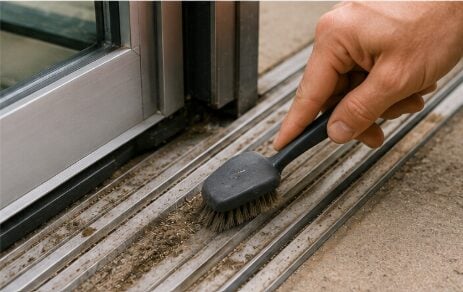
The earliest signs of trouble often appear in the tracks. When a door starts to feel heavier or louder, the cause is frequently sand, rock salt, food debris, or broken glass collecting in the track. That buildup forces the door to ride higher, scrape against metal, and strain the operator, and over time it wears the track and shortens hardware life.
You do not need to dismantle anything, but the tracks do need cleaning on a schedule suited to your traffic and location. A quiet office lobby has very different needs than a cafe entrance or a salt-exposed exterior door during a DC winter:
| Site Condition | Track Cleaning Frequency |
|---|---|
| Mall or office lobby | Weekly |
| Busy retail storefront | 2 to 3 times per week |
| Restaurant or cafe entrance | Daily |
| Medical or healthcare facility | Daily |
| Sandy, salty, or windy exterior | Multiple times per day |
A few minutes with a vacuum and a damp cloth on that schedule prevents most of the drag and noise that lead to service calls.
Trick #2: Inspect the Rollers for Wear and Damage
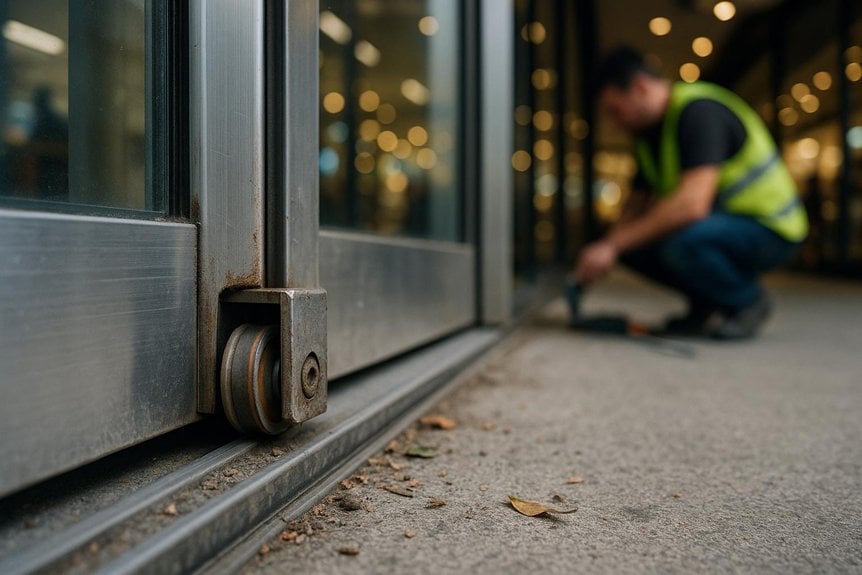
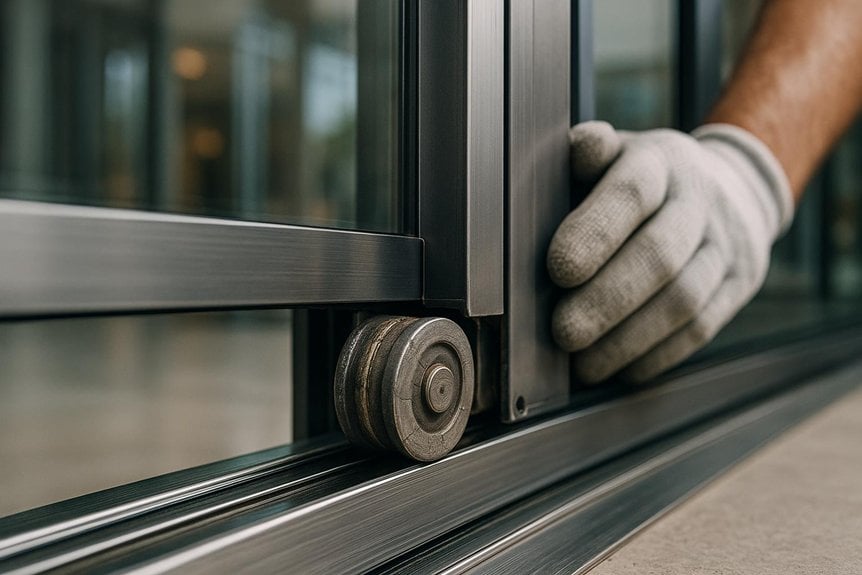
Rollers carry the weight of the door, so when they wear, the rest of the system has to work harder. Worn rollers are one of the most common reasons a door operates heavily, scrapes, or will not stay aligned, and you can check them without taking anything apart.
Look along the bottom edge of the door. A panel that sags, drags, or rocks in the opening usually points to worn or flat-spotted rollers. Listen for grinding or popping as it travels, and watch for metal filings below the track, cracked roller housings, or uneven gaps at the jamb. When several of these appear together, the rollers are near the end of their service life, and replacing them promptly protects the track and operator. Left long enough, that wear can eventually require a full door system replacement rather than a simple part swap.
Trick #3: Lubricate the Moving Parts Correctly
With the rollers moving freely, the rest of the system still needs protection from drying out and wearing prematurely. The goal is the right lubricant in the right place, applied on a schedule. A silicone-based or dry-film lubricant made for door hardware is the correct choice, rather than general-purpose grease, which attracts dirt and builds up in the track.
Concentrate on the points that move: roller bearings, pivot points, guide shoes, and lock latches. Light, controlled applications work best, since heavy spraying creates buildup that later turns into resistance and noise. In medical offices, restaurants, and retail spaces, overspray is also a housekeeping and slip concern. If you are unsure which product your specific automatic or manual system requires, ask your service provider to set the standard so staff can apply it correctly between visits.
Trick #4: Check Door Alignment and Track Condition
Even with clean tracks and fresh lubricant, a door that is out of alignment will resist every time it moves. Panels that ride too tight to the header, drag at the sill, or rub the jamb create friction that strains the operator, rollers, and track. That added load usually appears first as a heavier feel or uneven travel.
Step back and check the sight lines. The panel gaps should be even, and the door should sit square in the frame. Watch it move: if it wobbles, taps the frame, or rises and dips, the alignment is off. Inspect the track for dents, flat spots, or loose sections, since damaged track wears new rollers quickly. Alignment issues rarely resolve on their own, and they steadily increase wear on the rest of the system.
Trick #5: Address Small Issues Before They Cause Downtime
A sliding door rarely fails without notice. Most sudden failures begin as a slight drag, a new sound, or a brief hesitation before closing. When you notice those changes, it is better to schedule service than to wait, since the convenient moment may not arrive during business hours. A few symptoms are worth acting on promptly:
- Heavier Operation: A door that takes more effort often indicates failing rollers.
- Scraping Sound: Metal-on-metal noise usually means track damage.
- Sticky Travel: Hesitation can signal an operator that needs adjustment.
- Sensor Issues: Inconsistent detection can become an ADA or safety concern.
- Sagging Panel: A door out of square wears its hardware unevenly.
Acting early keeps a repair small. For a door that has already stopped operating safely, emergency door service restores access quickly, though preventative attention is usually less costly than recovering from an unplanned shutdown.
How Often Should Commercial Doors Get Professional Service?
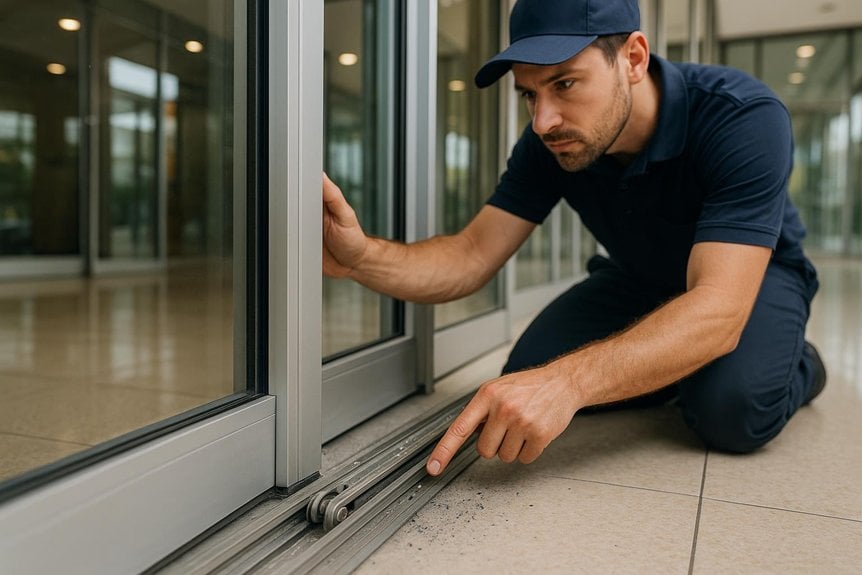
Routine cleaning helps, but commercial entry systems require professional inspections to catch wear before it affects daily operations. The ideal maintenance schedule depends on traffic volume, environmental conditions, and whether the entrance uses automatic operators.
| Facility Type | Recommended Inspection Frequency |
|---|---|
| Office Building | Every 6 months |
| Retail Storefront | Every 3–4 months |
| Restaurant | Quarterly |
| Medical Office | Quarterly |
| High-Traffic Commercial Entrance | Every 2–3 months |
Professional inspections typically include roller wear evaluation, track condition checks, hardware tightening, sensor testing, operator adjustments, and safety verification. Preventative maintenance is usually far less expensive than emergency repairs or business interruptions caused by an unexpected door failure.
What Happens During a Commercial Door Inspection?
A professional door inspection focuses on more than whether the door opens and closes. Technicians evaluate roller condition, track wear, alignment, safety sensors, hardware integrity, and operator performance to identify developing problems before they affect customers or employees.
In many cases, inspections uncover minor adjustments or worn components that can be addressed immediately. Catching these issues early helps extend equipment life, reduce repair costs, and minimize the risk of unexpected downtime.
Why Choose American Glass & Door for Commercial Door Repair in the DMV
A commercial entrance sees heavy daily use, so the early signs of wear are worth addressing before they lead to a shutdown. A heavier feel, a new noise, or a door that hesitates is a clear indication the system needs attention while the fix is still simple.
At American Glass & Door, technicians work on the sliding glass doors, automatic entry systems, and storefront doors that businesses across the DMV use every day. They inspect the tracks, open the covers, and measure hardware wear rather than guessing, supported by responsive commercial door service and clear repair options.
If your entrance is dragging, sticking, or making new noises, it is worth addressing before it interrupts your business. Schedule a door evaluation to keep your entrance smooth, safe, and reliable.