

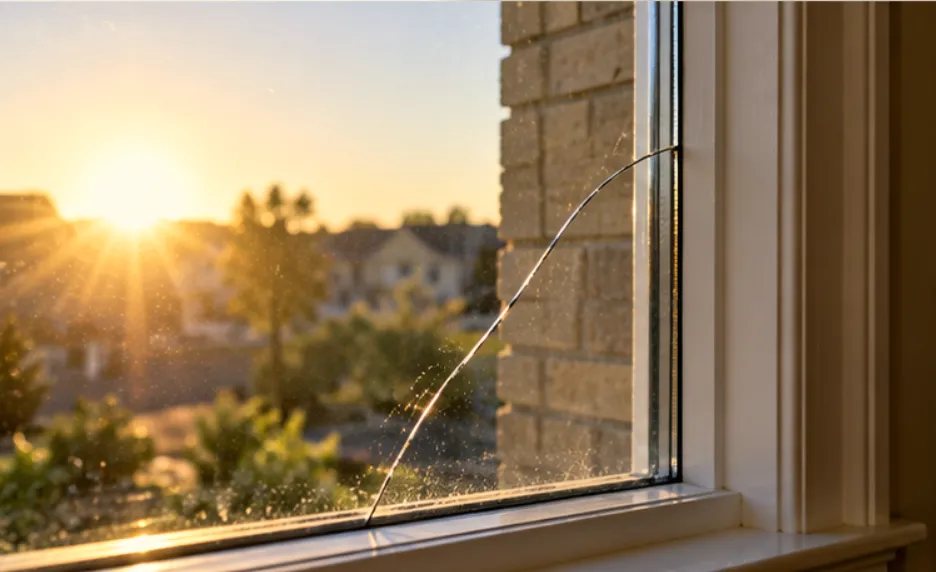

It’s the first cold morning of the season in Washington, DC. You unlock your storefront or arrive at your office, turn on the heat, and notice a crack running across a window that looked perfectly fine the previous evening. There is no rock on the floor, no obvious impact mark, and no sign of a break-in. So why did the glass crack overnight?
The most likely answer is thermal stress. One part of the pane heats up faster than the rest, and the glass splits from the strain. The usual pattern is simple. The edge of the glass sits inside the frame and stays cold, while the morning sun warms the center. Indoor heat and blinds can widen that gap.
For commercial property owners in Washington DC, the cause decides the fix. A one-off thermal crack usually needs only a new pane. A window that keeps cracking usually needs a different type of glass. Here’s how to tell what happened and what to do next.
Why Do Windows Crack on the First Cold Mornings?
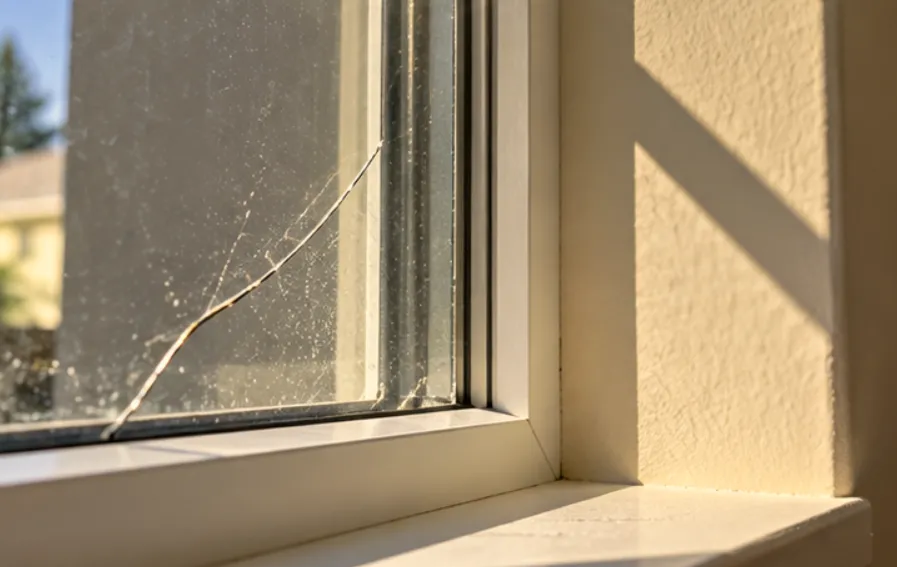
On a cold morning, the whole pane starts out cold. Then the sun rises and warms the exposed center of the glass. The edges stay cold because the frame covers them and the sun never reaches them. Glass expands as it warms, so the warm center pulls against the cold edge.
If that strain is greater than the edge can take, the glass cracks with nothing touching it. That’s a thermal stress crack.
Several conditions can contribute:
- Cold edges: The glass held inside the frame stays cold long after the center warms.
- Direct morning sunlight: Sunlight can heat one section faster than another.
- Indoor heating: A vent blowing warm air onto cold glass heats one spot fast.
- Blinds and curtains: Coverings hung close to the glass trap heat between them and the pane.
- Edge damage: A small chip from installation or cleaning gives a crack a place to start.
- Tinted glass and window film: Darker glass and aftermarket film absorb more sun and heat up faster.
- Plain (annealed) glass: Standard glass handles the smallest temperature difference. Tempered and heat-strengthened glass handle far more.
Washington DC sees plenty of these mornings from late fall through early spring: cold at dawn, bright by mid-morning. Cold weather alone doesn’t prove a crack is thermal, though. The crack pattern tells you more, and we cover that below.
How Can Sunlight Cause a Window to Crack?
Sunlight rarely hits a window evenly. In downtown DC, taller buildings throw moving shadows across storefronts all morning. Awnings, signs and interior coverings shade parts of the glass too.
The sunlit section warms and expands. The shaded section and the edges inside the frame stay cold. The strain builds where the two meet, and it’s highest at the edge.
Glass type matters most. Plain annealed glass, the standard in many older windows, tolerates the smallest temperature difference. Tinted glass, some Low-E coatings and aftermarket window film absorb more heat and raise the risk. Heat-strengthened and tempered glass handle much larger differences, which is why they’re the usual fix for a window that keeps cracking. Large panes are more exposed too, because one sheet can sit half in sun and half in shade.
If a storefront window cracks shortly after sunrise, note which parts of the glass were in sun and which were in shade. That detail helps confirm the cause quickly.
Can Indoor Heaters and Blinds Cause Thermal Stress Cracks?
Yes. Both can make one part of the glass much warmer than the rest. Neither one cracks glass on its own, but either can tip a cold pane over the edge.
Heating Vents Near Windows
A vent that blows warm air straight onto cold glass heats one patch fast. The risk peaks when the heat first kicks on after a cold night.
In commercial spaces, check whether supply vents aim at the glass and whether the same window keeps cracking. A deflector that turns the airflow away from the pane is often enough. Have the glass checked before you change anything bigger.
Blinds and Curtains That Trap Heat
Blinds and curtains hung tight to the glass trap a pocket of air. On a sunny morning that pocket heats up, and so does the glass behind it. Dark coverings absorb even more heat.
Leave a gap between the covering and the glass, and follow the window maker’s clearance guidance. If cracks keep showing up behind the same blind, the glass itself may need an upgrade.
How Do You Tell a Thermal Stress Crack From an Impact Crack?
Look at where the crack starts and the angle at which it leaves the edge. Those two details usually tell the story.
Signs of a Thermal Stress Crack
A thermal stress crack starts at the edge of the glass. It leaves the edge at close to a right angle, then wanders across the pane as a single line, sometimes branching. There’s no impact point.
Clues that point to thermal stress:
- The crack begins at the edge and leaves it at roughly 90 degrees.
- There is no clear impact point or central star pattern.
- The damage appears after a cold night or sunny morning.
- The pane gets a mix of sun and shade.
- A heating vent or blind sits close to the glass.
A crack that leaves the edge at a sharp angle, or several cracks from one point on the edge, points more to frame pressure or edge damage. That’s an installation problem, and a new pane alone won’t fix it.
Signs of an Impact Crack
Impact damage starts where something hit the glass. It usually shows a small chip or crater with cracks spreading out from it like a star or a bull’s-eye.
Check for a chip or pit at the center of the cracks. Impacts are most common near entrances, sidewalks, loading areas and anywhere wind can throw debris.
On tinted or reflective glass, the impact point can be hard to spot. Don’t run your hand over the crack to find it. If the pane is loose or shedding pieces, keep people away and call a glass professional.
Thermal, Impact, or Frame Stress at a Glance
| Cause | Where it starts | What it looks like | Usual fix |
|---|---|---|---|
| Thermal stress | The edge | One wandering line that leaves the edge at about 90 degrees | New pane, or a stronger glass type if it keeps happening |
| Impact | The point of contact | Chip or crater with cracks spreading out like a star | New pane, or chip repair if the damage is small |
| Frame or edge stress | The edge | Crack at a sharp angle or several cracks from one spot | Frame or setting repair, then new glass |
Why Are Commercial Storefront and Office Windows Especially Important to Check?
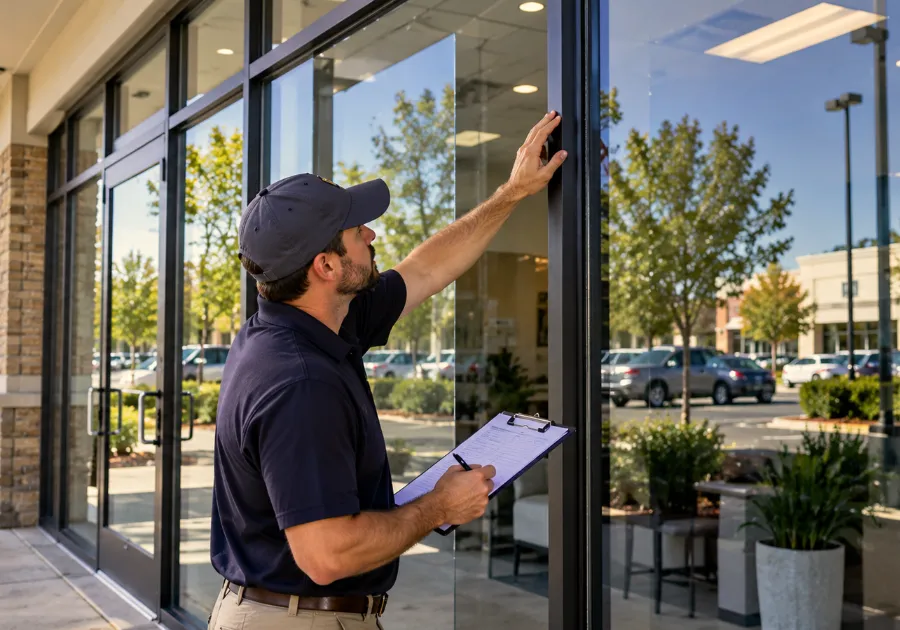
Storefronts and offices use large panes, and large panes are the most likely to sit half in sun and half in shade. They also face heaters, displays and blinds on the inside.
A cracked storefront affects more than looks. It can weaken security, block part of your entrance and put customers at risk. In an office, a cracked pane means closing off part of a room until it’s replaced.
Storefront Windows
Get a cracked storefront pane looked at quickly, especially if the crack runs across the glass, keeps growing or has loose pieces. Move displays away from the window and keep customers back from it.
The replacement depends on the glass type, size, frame condition and the safety-glass rules for that opening. If the pane keeps cracking, we’ll recommend a stronger glass type rather than another identical sheet. Learn more about commercial window replacement in Washington DC.
Office Windows
Office windows deal with morning sun, heating vents and blinds all at once. If you manage the building, note when and where each crack appears, especially if several windows on the same side of the building crack the same way.
Repeat cracks need a cause, not just new glass. We check the glass type, the edges, the frame and the heat sources nearby, then tell you honestly whether a vent change, a frame fix or a different glass will stop it. For chips and small damage that hasn’t spread, see our commercial glass repair options.
What Should You Do When You Discover a Cracked Window?
Whatever caused it, safety comes first. A crack can spread as temperatures change, and cracked glass can give way with little warning.
Follow these steps:
1. Keep people away from the window. Block off the area if the glass is badly cracked, loose or shedding pieces. Don’t press on the pane.
2. Photograph the damage. Take pictures from a safe distance and record when you first noticed the crack. Include the surrounding frame and note whether sunlight, blinds, or heating vents may be relevant.
3. Record recent conditions. Note overnight temperatures, morning sunlight, indoor heating, and any known impact or construction activity. These details help pin down the cause.
4. Call a glass professional. The right fix depends on the crack pattern, glass type, frame condition and how stable the pane is.
5. Avoid temporary fixes that conceal the problem. Tape or household adhesives do not restore the glass’s strength or make an unstable pane safe.
For a cracked window at home, see our window glass repair and replacement service.
What Can Homeowners Do to Reduce the Risk of Thermal Cracks?
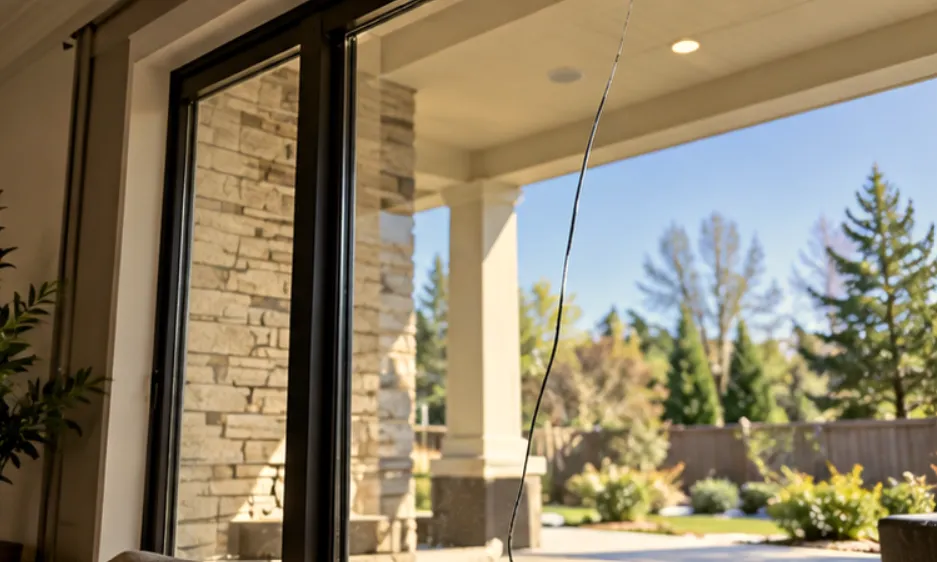
Home windows crack for the same reasons, usually on sunny winter mornings in rooms with heavy curtains or a heat vent under the window. A few habits lower the risk.
Start with these practical measures:
- Check heating vents: Avoid concentrated warm airflow directly onto cold glass.
- Leave a gap behind coverings: Don’t hang blinds or heavy curtains tight against the glass.
- Inspect the glass edges: Have visible chips or damage evaluated before they worsen.
- Observe recurring patterns: Record the time of day, sunlight exposure, and indoor conditions when cracks appear.
- Maintain window frames: Address visible damage or movement that may place pressure on the glass.
- Ask before adding window film: Some films raise the risk of thermal cracks on certain glass, so check that the film suits your windows first.
If the same window cracks twice, don’t just replace it a third time. Ask about tempered or heat-strengthened glass for that opening.
Why Choose American Glass and Doors for Window Replacement?
A crack on a cold morning is a clue as well as damage. We read the crack pattern, check the edges and frame, and look at the sun and heat around the glass before we quote anything. Then we tell you straight whether a single new pane will do or whether that opening needs a stronger glass.
American Glass and Doors has replaced commercial and residential glass across Washington DC, Maryland and Virginia since 2018. Whether you run a storefront with a cracked display window or manage an office building with repeat cracks, one team handles the assessment, the glass and the install, along with the rest of our glass and door services.
Have a cracked window that needs attention? Call American Glass and Doors at (571) 583-8882 or send us the details online. We’ll tell you what most likely caused it and the right fix.
Frequently Asked Questions
Can a Window Crack From Cold Weather Without Being Hit?
Yes. When the sun warms the center of a cold pane while the edges stay cold inside the frame, the strain can crack the glass with nothing touching it. This is called a thermal stress crack. It’s most common on clear, cold mornings and in plain annealed or tinted glass.
Do Thermal Stress Cracks Usually Start at the Edge?
Yes. A thermal stress crack almost always starts at the edge and leaves it at close to a right angle before wandering across the glass. A crack that leaves the edge at a sharp angle, or several cracks from one point, points more to frame pressure, edge damage or an impact.
Can Blinds Cause a Window to Crack in Winter?
They can contribute. Blinds hung tight to the glass trap warm air against the pane on sunny days, which widens the gap between the warm center and the cold edges. Leave space between the blinds and the glass. If cracks keep appearing behind the same blinds, the glass may need an upgrade.
Can Double-Pane Windows Develop Thermal Stress Cracks?
Yes. In a double-pane window, the outer pane takes the cold while the inner pane takes the room heat and the sun, and either one can crack. Tinted and Low-E coated panes absorb more heat, so they’re more exposed. The fix is usually a new sealed unit sized to the existing frame.
Should I Replace a Window Immediately if It Has a Small Crack?
Not always the same day, but don’t wait long. Cracks spread as temperatures swing, and a cracked pane is weaker in wind or if someone bumps it. Keep people away if the glass looks unstable. A crack in a door, in storefront glass at walking height or in overhead glass should be handled right away.