

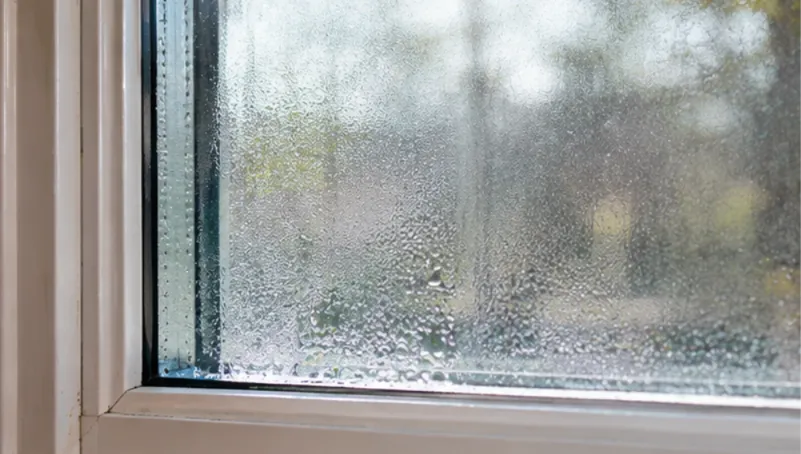

You notice one window looks permanently hazy, like a film you cannot wipe off, and some mornings there is moisture trapped between the two panes. Nothing you clean touches it, and the haze is slowly showing up in other windows too. Left alone, the view keeps getting worse and the window quietly stops insulating the way it should. This guide helps you work out whether that haze is a quick clean, a repair, or a glass replacement, and whether it is worth doing anything right now.
Fog between the panes of a double-pane window means the sealed glass unit has failed, and you cannot clean it off because the moisture lives inside the sealed space between the panes. There are two real ways to address it: defogging, which drills and vents the unit to clear the haze but does not restore the insulating seal, or replacing the sealed glass unit itself while keeping your existing frame. Replacing the glass unit is the only fix that brings back both clarity and insulation, and in most cases the frame can stay put.
Why Is Your Double-Pane Window Foggy in the First Place?
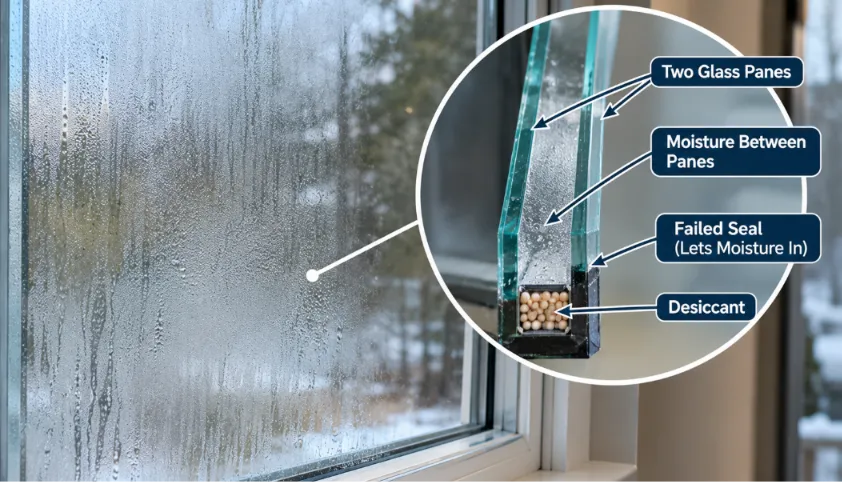
A double-pane window, also called an insulated glass unit (IGU), contains two glass panes separated by a spacer. The space between them is filled with dry air or an insulating gas such as argon and sealed around the edges to limit moisture entry. A desiccant inside the spacer helps absorb residual moisture and keep the space dry. When the perimeter seal deteriorates, moisture can enter the unit and condense between the panes, creating the cloudy appearance you cannot remove with ordinary cleaning. The same sealed units are used in sliding glass doors, so a patio door can fog for exactly the same reasons.
These seals gradually age, and several conditions can affect how long they last. A window may begin showing signs of seal failure earlier or later depending on its construction, installation, and exposure to the elements. Common contributing factors include:
- Temperature changes: Repeated heating and cooling cause the glass and seal materials to expand and contract.
- Direct sunlight: Prolonged UV exposure can contribute to the deterioration of certain seal materials.
- Standing water: Water collecting around the sill or window edges can expose the seals and surrounding components to prolonged moisture.
- Poor installation: Improper glazing or inadequate sealing can leave the unit more vulnerable to moisture intrusion.
- Aging materials: Over time, the spacer and perimeter seal can lose their ability to maintain a moisture-resistant barrier.
The DMV’s humid summers can make an existing seal problem more noticeable. When outdoor temperatures and humidity rise, moisture trapped inside a compromised unit may become more visible as condensation or haze. You might notice a window looking relatively clear in cooler weather but becoming increasingly cloudy during warmer months. Once moisture is trapped between the panes, cleaning the glass will not solve the problem.
Can You Just Clean a Foggy Window?
Cleaning a foggy window will only help if the moisture or dirt is on an accessible glass surface. When the haze is trapped between double-pane glass, wiping the inside and outside will not remove it. The moisture sits inside the sealed unit, where ordinary cleaning products and cloths cannot reach.
Before considering glass replacement or defogging, take a few minutes to identify where the haze is coming from:
- Wipe the interior surface: Use a clean, dry microfiber cloth to see whether the film clears.
- Clean the exterior surface: Wipe the opposite side of the glass to rule out dirt, dust, or outdoor residue.
- Check for smudging: Surface dirt and condensation may smear or disappear when wiped, while trapped moisture remains unchanged.
- Observe the window in different lighting: Look for persistent cloudiness or droplets that appear to sit between the panes.
- Watch for changes in weather: Notice whether the haze becomes more visible with temperature changes but cannot be wiped away.
If the cloudiness remains after cleaning both accessible surfaces, the insulated glass unit may have a failed perimeter seal. Surface condensation and dirt require ordinary cleaning or humidity control, while moisture trapped between panes generally requires a different solution.
Once you confirm that the haze is inside the sealed unit, cleaning is no longer a practical fix. You can explore professional defogging, which may improve the appearance in some cases, or replace the insulated glass unit to address the failed seal. Understanding the difference helps you choose a solution based on the actual condition of the window.
Does Window Defogging Actually Work?
Window defogging is a process designed to reduce visible moisture and haze trapped between double-pane glass. Depending on the method, a technician drills small openings into the glass, removes moisture from the space between the panes, and allows the unit to ventilate. This can improve visibility, but it does not rebuild the original perimeter seal.
What defogging does:
- Clears visible haze, so the glass looks better
What defogging does not do:
- Repair the failed perimeter seal
- Put back the argon or other insulating gas
- Restore the window’s original insulating performance
- Stop moisture from coming back over time
Defogging may be worth considering when improving the appearance of a window is your main priority and you understand its limitations. It is not the same as replacing the failed insulated glass unit. If you want to restore the sealed construction and insulating performance, replacing the glass unit is generally the more complete solution.
Should You Replace the Glass or the Whole Window?

A foggy window does not automatically mean you need a complete replacement. In many cases, the problem is limited to the sealed insulated glass unit, allowing you to keep the existing frame and sash. The deciding factor is the condition of the surrounding window. If the frame is still structurally sound and operates properly, replacing the glass alone can restore clarity and insulation without the added expense of a new window.
Glass-Only Replacement for Structurally Sound Windows
If the window opens, closes, locks, and seals properly, with no signs of rot or water damage, replacing only the insulated glass unit is often the practical choice. It is routine residential glass work: a technician measures the existing opening, orders a correctly sized replacement unit, and installs it in the existing frame. You regain clear glass and the intended insulating performance without replacing hardware or other components that are still in good condition.
Frame and Sash Damage That Requires More Than New Glass
Sometimes the failed glass is not the only problem. A swollen sash, loose frame joints, damaged corners, or years of moisture exposure can affect how securely a replacement unit fits. Installing new glass without addressing these issues may leave the original problem unresolved. When the surrounding structure is significantly damaged, repairing or replacing the window assembly may be necessary.
Signs of Moisture Damage Around the Window Frame
Pay particular attention to the bottom corners, sill, and areas where water can collect. Soft or spongy wood, peeling finishes, discoloration, and visible deterioration may indicate moisture damage. Vinyl frames should also be checked for cracks or separation. A careful inspection helps determine whether the existing frame can support a replacement glass unit.
Full Window Replacement for Aging or Deteriorating Windows
Some Washington-area homes have double-pane windows installed decades ago that are now showing signs of wear. If several windows have failing seals, damaged frames, persistent drafts, or operating problems, replacing individual glass units may not be the most practical long-term investment. A complete window replacement can address problems with both the glazing and the surrounding assembly.
Before deciding, have the glass measured and the frame inspected. This helps establish whether the problem requires a new sealed unit or a complete window replacement. A contractor experienced in both options can provide an appropriate recommendation and handle window glass repair and replacement in Washington, DC.
The goal is to replace only what has failed while keeping components that are still performing properly. A proper assessment helps you avoid unnecessary replacement costs and choose a solution that addresses the actual condition of your windows.
Does a Foggy Window Hurt Your Energy Bills?
Yes, a failed seal costs you. Once the insulating gas escapes and humid air fills the gap, the window loses part of its insulating value. That shows up as a colder pane in winter and more heat coming through in summer, so your heating and cooling have to work harder.
The Low-E coating usually survives the seal failure, but the paired gas fill does not, so the two no longer work together as designed. You may feel a draft near the glass, condensation that lingers, or a room that runs a step warmer or cooler than the rest. The comfort penalty often beats the dollar figure.
A replacement sealed unit can match the original specification, including Low-E glass, so you get the efficiency back and not just the view. Whether that efficiency loss justifies acting now is easier to weigh side by side.
Which Fix Does Your Foggy Window Need?
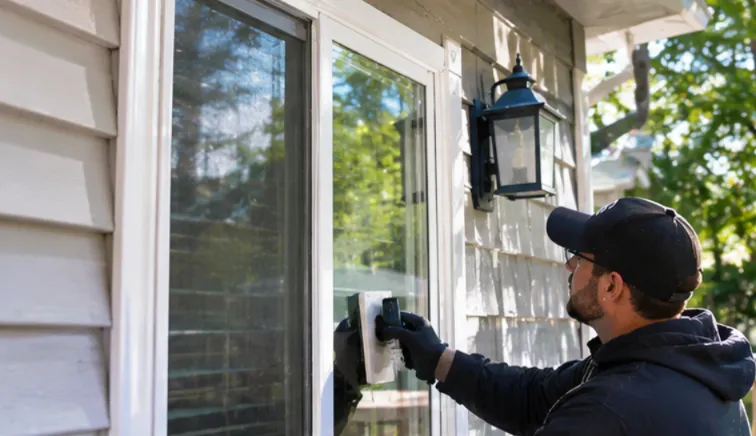
Once you know where the moisture is coming from, choosing the right solution becomes easier. The best option depends on whether the haze is on the glass surface, trapped inside the sealed unit, or connected to damage around the window frame.
| Option | Best when | What you get | Main consideration |
|---|---|---|---|
| Surface cleaning | Dirt or condensation is on an accessible glass surface | Clearer glass after cleaning | Does not fix moisture trapped between panes |
| Professional defogging | You want to improve the appearance of a foggy unit | Reduced visible haze | Does not restore the original sealed construction |
| Insulated glass unit replacement | The glass seal has failed, but the frame is sound | New sealed glass with restored intended insulating performance | Usually avoids replacing the entire window |
| Full window replacement | The frame, sash, or complete window assembly is significantly damaged | A new window assembly | More extensive work and expense |
The most reliable way to choose is to have the glass measured and the frame inspected before approving the work. This helps you understand exactly which components need attention and avoid paying for a complete window when a glass-only replacement would solve the problem.
Why Choose American Glass and Doors for Foggy Windows in the DMV?
Persistent haze between the panes does not always mean a new window. At American Glass and Doors, we check the sealed glass unit and the frame around it, then tell you plainly whether new glass alone will fix it. You pay for the part that has actually failed, not for a whole window you did not need.
We serve homeowners across DC, Maryland, and Virginia, and we handle window and door glass alike. If your patio door has gone hazy too, we can check it on the same visit.
Ready to see clearly again? Call (571) 583-8882 or request a free estimate, and we will tell you whether the glass alone will fix it.
Frequently Asked Questions
Can I defog a double-pane window myself with a home remedy?
No. Home remedies and DIY defogging kits cannot restore a failed insulated glass seal. Some kits drill small holes into the glass to release trapped moisture, but they do not replace the lost insulating gas or repair the original seal. The lasting solution is usually replacing the sealed glass unit.
How long does a replaced insulated glass unit typically last before it fogs again?
A well-made, properly installed insulated glass unit commonly lasts 10 to 25 years before the seal gives out. Lifespan depends on seal quality, installation, and how much sun and temperature swing the window takes. Units on sunny south- and west-facing walls tend to fail sooner.
How long does replacing a sealed glass unit take?
The actual installation is usually quick when the correct replacement unit is available and the existing frame is in good condition. The process typically requires an initial measurement visit, fabrication, and a return appointment. The total turnaround depends largely on the glass type and availability.
Will my frame have to be replaced too?
Not necessarily. If the existing frame and sash are structurally sound, without significant rot, warping, or water damage, the insulated glass unit can usually be replaced separately. A technician should inspect the corners, seals, and surrounding frame to determine whether glass-only replacement is suitable.
Why do several of my windows seem to fog around the same time?
Several windows may begin fogging around the same time if they were installed during the same renovation. Their insulated glass seals may have experienced similar aging and weather exposure. If one unit fails, it is worth checking the other windows for trapped moisture or persistent haze.